


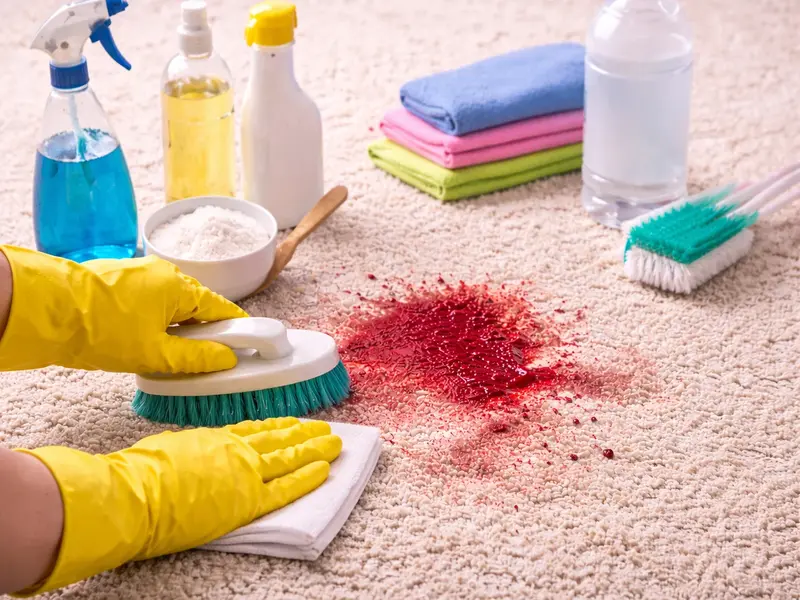

Carpet stains happen to everyone. One minute everything looks fine, and the next there’s coffee on the floor, muddy footprints, or a pet-related surprise. It’s frustrating, but it doesn’t have to be permanent.
In our day-to-day carpet cleaning work, we regularly see stains like coffee spills, pet accidents, and tracked-in dirt causing long-term damage when treated incorrectly. Many homeowners try quick fixes that actually make stains harder to remove.
But with the right steps and a little know-how, most carpet stains can be removed without damaging your flooring. The key is understanding what caused the stain and how your carpet reacts to different cleaning methods.
In this carpet stain removal guide, we will make things simple, sharing practical tips and easy solutions. This complete carpet stain removal guide helps you understand stains, carpet types, and the safest cleaning methods for long-term results.
Before You Start Carpet Cleaning, Do This
Before you grab a cleaner or start scrubbing, pause for a moment. A little preparation goes a long way. Understanding your carpet and the stain first can prevent damage and make cleaning process far more effective.
Different carpet fibers react differently to moisture and cleaning solutions. Using the wrong approach can cause color fading, fiber damage, or even permanent staining, which is something we often correct during professional cleaning visits.
➤ Understand Your Carpet Type
Not all carpets are the same. Synthetic fibers handle moisture better, while natural fibers need gentler care. Using the wrong method can weaken fibers and cause permanent damage. Some common carpet types include:
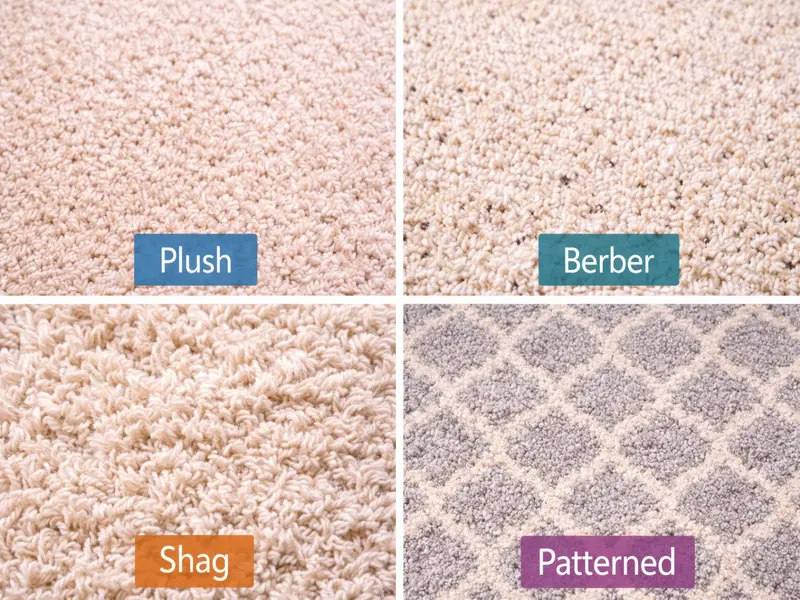
Nylon: Very durable and commonly used in homes
Polyester: Soft and stain-resistant
Olefin (Polypropylene): Moisture-resistant and budget-friendly
Triexta: Highly stain-resistant and easy to clean
Wool: Natural, soft, and luxurious
Sisal: Natural fiber, strong but highly sensitive to moisture
For example, we often see wool carpets getting damaged due to excessive water use, while synthetic carpets like nylon handle cleaning much better with controlled moisture.
➤ Understand the Stain Type
Second, understand the type of stain you are dealing with. Every stain behaves differently. Water-based stains are easier to lift, oil-based stains require special treatment, and protein-based stains can set quickly if cleaned the wrong way.
One common mistake we notice is treating all stains the same way. For instance, applying hot water on protein-based stains like blood or dairy can actually set the stain deeper into the carpet fibers.
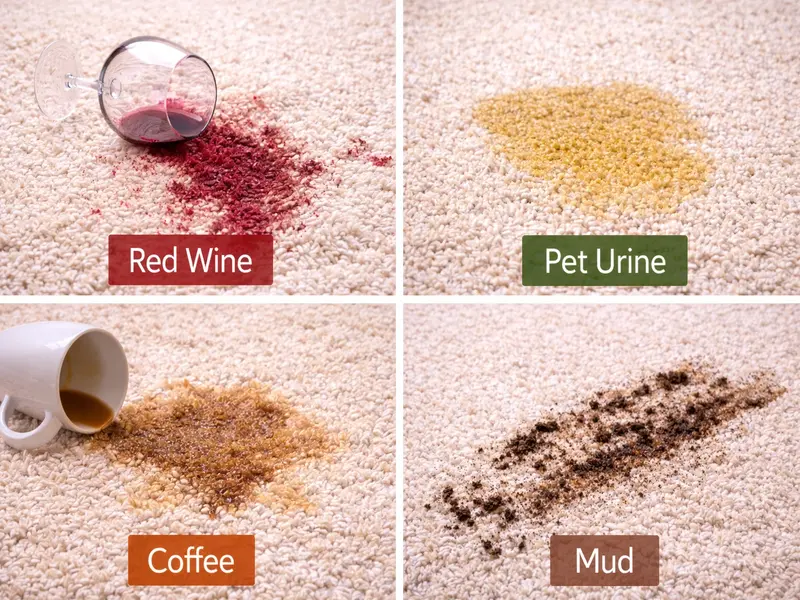
- Water-based stains
- Oil-based stains
- Protein-based stains
➤ Check Carpet Care Labels
Most importantly, never forget to check care labels or the instructions from installers. Care labels offer valuable guidance. They explain safe cleaning methods and warn against techniques that could shrink, fade, or damage your carpet during stain removal.
Some carpet care labels you should identify:
W – Use water-based cleaning solutions only.
S – Use solvent-based cleaners only (no water).
WS (or W/S) – Safe to use either water-based or solvent-based cleaners.
X – Vacuum only; professional cleaning recommended.
HWE – Hot Water Extraction is recommended.
DC – Dry Clean only.
Types of Carpet Stains and Steps to Remove Them
Now that you understand your carpet type, stain category, and care labels, you’re ready to treat the problem properly. The right carpet stain removal method depends on what caused the stain. Below are simple, step-by-step instructions to handle some of the most common carpet stains safely and effectively.
➤ Food and beverage stains
This is one of the most common stains we handle in residential homes, especially from coffee, wine, and food spills during gatherings.
Step 1: Blot the spill immediately using a clean, absorbent cloth.
Step 2: Mix mild dish soap with lukewarm water in a bowl.
Step 3: Gently dab the solution onto the stained area.
Step 4: Blot repeatedly until the stain begins lifting.
Step 5: Rinse lightly with clean water and blot completely dry.
➤ Pet stains and odors
Pet stains are not just surface-level — in many cases we see the odor settling deep into the carpet backing if not treated correctly early on.
Step 1: Blot up as much moisture as possible immediately.
Step 2: Rinse the area lightly with cool, clean water.
Step 3: Apply an enzyme-based cleaner to neutralize odors.
Step 4: Allow the cleaner to sit as instructed.
Step 5: Blot dry, then let the area air-dry fully.
➤ Grease and oil stains
Oil-based stains are often tricky because they don’t dissolve easily in water, which is why many DIY attempts fail to fully remove them.
Step 1: Blot gently to remove excess oil without spreading.
Step 2: Sprinkle baking soda generously over the stain.
Step 3: Let it sit for 30 minutes to absorb oil.
Step 4: Vacuum the area thoroughly to remove residue.
Step 5: Dab with a mild dish soap solution and blot dry.
➤ Ink, paint, and dye stains
Ink, paint, and dye stains are some of the most delicate to handle. In our cleaning work, we’ve seen these stains spread quickly or permanently set when rubbed aggressively or treated with the wrong solution.
Step 1: Blot carefully to prevent spreading the stain.
Step 2: Test rubbing alcohol on a small hidden area of the carpet first.
Step 3: Dab alcohol gently onto the stained spot.
Step 4: Blot repeatedly with a clean, dry cloth.
Step 5: Rinse lightly and allow the carpet to dry.
➤ Mud and dirt stains
These stains often require controlled spot treatment rather than heavy scrubbing, as excessive pressure can push the pigment deeper into the carpet fibers.
Step 1: Allow mud to dry completely before cleaning.
Step 2: Vacuum thoroughly to remove loose dirt particles.
Step 3: Mix mild soap with lukewarm water.
Step 4: Gently dab the stained area with the solution.
Step 5: Blot dry and allow proper air circulation for faster drying.
Carpet Cleaning Solutions: DIY vs. Storebought
Now that you know how to treat different types of stains, the next question is what to use and what the best way to remove carpet stains really is. Should you grab ingredients from your kitchen or rely on a commercial cleaner? Both options can work well, but the right choice depends on the stain, your carpet type, and how deep the damage goes.
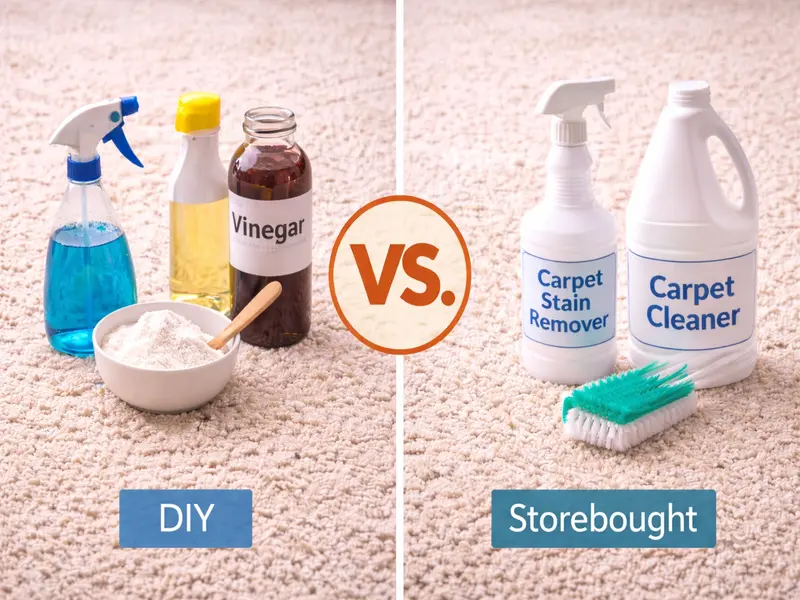
Pros of DIY Solutions
1. Affordable and easy to make at home
2. Uses simple ingredients like baking soda and vinegar
3. Fewer harsh chemicals in most homemade mixtures
4. Convenient for quick, fresh spills
Cons of DIY Solutions
1. May not remove deep or set-in stains
2. Incorrect mixtures can damage carpet fibers
3. Results can vary depending on stain type
4. Strong odors like pet urine may not fully disappear
While DIY solutions can work for minor, fresh stains, we’ve seen many cases where incorrect mixtures or overuse lead to discoloration or residue buildup that attracts more dirt over time.
When store-bought cleaners work better
While homemade solutions are helpful for minor spills, some stains need stronger treatment. Besides avoiding common DIY mistakes, you can use Commercial cleaners that are specially formulated to break down tough grease, deep-set stains, and stubborn odors that simple DIY mixtures may not fully remove.
Safety tips when using chemical cleaners
- Always test the product on a hidden carpet area first.
- Follow label instructions carefully and avoid overusing the product.
- Ensure proper ventilation while cleaning enclosed spaces.
- Avoid mixing different cleaning chemicals.
- Keep products away from children and pets.
Signs That Indicate it’s time to call professional carpet cleaners
Even with the right products and careful effort, some carpet problems just won’t budge. If you’ve tried DIY carpet stain removal methods and store-bought cleaners without success, it may be time to let professionals step in with expert treatment. Here are clear signs that expert help is the smarter choice.
In our professional cleaning experience, these are the most common situations where standard home cleaning methods are no longer effective.
- Stains reappear after cleaning and drying completely.
- Strong odors linger despite repeated cleaning attempts.
- Large areas are heavily stained or discolored.
- The carpet feels stiff or sticky after treatment.
- Mold or mildew smell is noticeable indoors.
- Delicate wool or natural fiber carpets require specialized cleaning.
- Water damage has soaked deep into the padding.
- Allergies worsen due to trapped dust buildup.
In these situations, following a basic carpet stain removal guide may not be enough to fully restore your carpet.
The Right Carpet Cleaning Company for Hassle-Free Fresh Flooring
Finding the right professionals can save you time, keep you stress-free, and even save you money in the long run. While this carpet stain removal guide helps you handle everyday spills, following a trusted carpet stain removal guide ensures you protect your flooring properly before deciding on professional cleaning. A reliable cleaning service can refresh your flooring, remove deep stains, and extend the life of your carpet without random carpet stain removal tips.
At California Steam Team, our trained team handles a wide range of carpet issues daily, from stubborn stains to deep-set odors. We focus on safe, effective cleaning methods suited to different carpet types, ensuring your flooring is treated with the right approach every time.
Schedule your appointment with our skilled carpet cleaners!!
Note: Some stains may not be completely removable depending on how long they’ve set or the type of carpet fiber. In such cases, professional cleaning can significantly improve the appearance, even if full removal is not always possible.
FAQs
Q. Can all carpet stains be removed?
Not every stain can be completely removed with DIY, especially if it’s old or untreated. However, many stains can be significantly reduced with the right method. Acting quickly always improves your chances.
Q. How long should I wait before cleaning a spill?
We would suggest not waiting at all. The sooner you blot and treat a spill, the better the outcome. Fresh stains are much easier to remove than ones that have dried and settled.
Q. Are DIY cleaners safe for all carpets?
Not always. Some natural or homemade solutions can damage delicate fibers like wool. We always recommend checking your carpet type and testing a small hidden area first.
Q. How often should carpets be professionally cleaned?
For most homes, professional cleaning once every 12 months works well. If you have pets, kids, or heavy foot traffic, scheduling a cleaning every 6–9 months is better.