


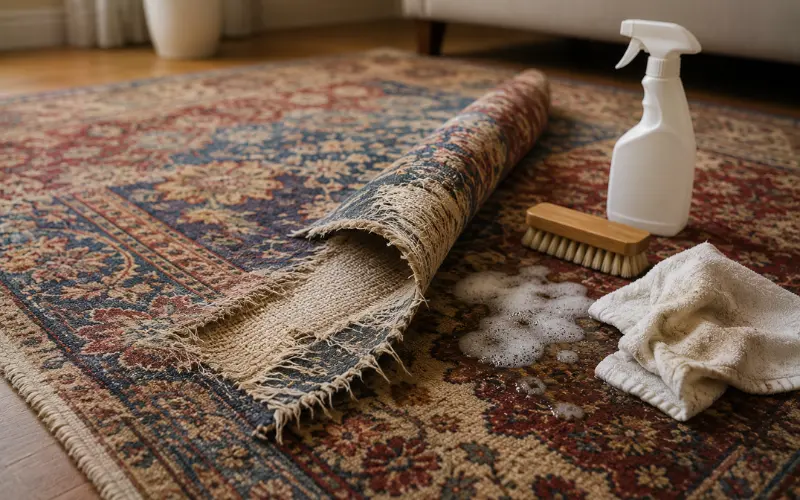

During on-site visits, our technicians engage with homeowners to pinpoint reasons for the deteriorating condition of area rugs. While regular use, dirt, and debris naturally affect fabric over time, our team discovered that another common major factor was area rug cleaning mistakes.
What’s interesting is that most homeowners didn’t realize they were causing damage to their rugs until our technicians pointed them out. According to our team’s assessment, these were unintentional errors made with good intentions to clean rugs.
Since incorrect rug cleaning methods could prove to be costly, we decided to share this informative piece explaining which common rug cleaning mistakes you must avoid to keep your rug in optimal condition.
7 Common Area Rug Cleaning Mistakes and Expert-Backed Tips to Avoid Them
Area rugs are more than decorative pieces. They are like filters that trap allergens, dust, and pollutants, improving indoor air quality. The Carpet and Rug Institute also emphasizes that consistent, correct care extends rug life, preserves fiber strength, and maintains vibrant colors.
Hence, it’s crucial to avoid mistakes while cleaning to ensure proper maintenance so that fabric remains durable, beautiful, and effective in enhancing comfort. Let’s see how you can do that:
Mistake 1. Excessive Use of Water
Homeowners often soak rugs, thinking more water means deeper cleaning. This saturates the backing, slows drying, and causes mold, mildew, and fiber shrinkage. Our rug cleaning specialists call this a rookie mistake because it’s one of the fastest ways to compromise rug integrity.
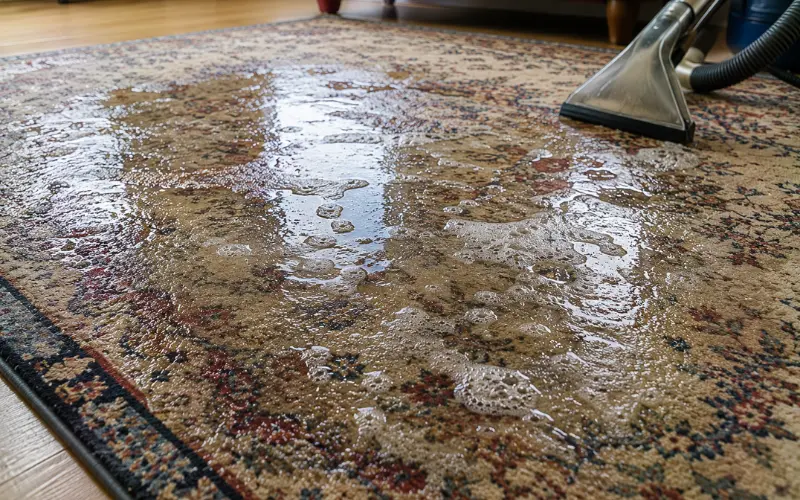
Here’s how you can correct it:
- Use a small amount of water when spot cleaning.
- Always blot, don’t soak the rug.
- After cleaning, dry the rug completely using fans or shaded air circulation.
- For deep cleaning, trust a professional rug cleaning service like us with controlled drying equipment.
Mistake 2. Hard Scrubbing
As per our team, another obvious error homeowners make is scrubbing aggressively to remove rug stains with stiff brushes or sharp tools. This action frays fibers, distorts pile texture, and instead of removing stains, it pushes them deeper into the backing.
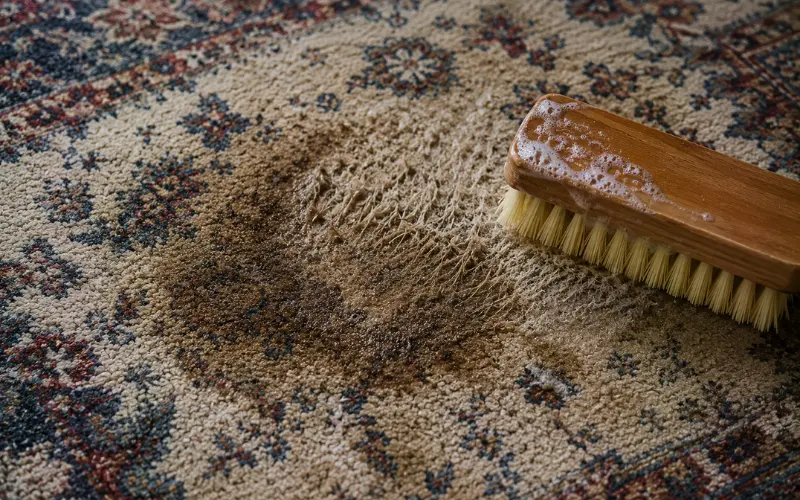
Here’s how you can correct it:
- Blot gently from the stain’s edge inward.
- Use absorbent cloths and mild, rug‑safe cleaners.
- Professionals recommend enzyme‑based spot treatments for stubborn spills.
Mistake 3. Use of Harsh Solutions
Bleach, ammonia, or other strong household rug cleaning solutions are often used in DIY rug cleaning. While they may appear effective upfront, their composition strips dyes, weakens natural fibers, and leaves residues that trap more dirt.
In our experience, this shortcut often results in irreversible fading and brittle textures, turning a temporary fix into long‑term damage.
Here’s how you can correct it:
- Use pH‑balanced cleaners that are formulated for area rugs.
- Always perform a patch test on a hidden section before full application.
- Avoid bleach, ammonia, or any such harsh options; use homemade rug cleaning solutions such as water + vinegar, or baking soda + lemon drops.
Mistake 4. Neglecting Care Labels
Our experts believe that ignoring the manufacturer’s instructions to clean is an unintentional yet big misstep. Homeowners think they know how to clean, but forget how different fabrics respond differently to cleaning solutions.
Ignoring fabric type and manufacturer cleaning guidelines means wool rugs may shrink, silk rugs can lose their sheen, and cotton or synthetic blends risk distortion or fading, which voids warranty protection.
Here’s how you can correct it:
- Always check the care tag before cleaning to ensure it’s safe for your rug’s material.
- Recognize fabric differences: wool requires gentle, pH‑balanced solutions; silk should only be handled by professionals.
- Test any cleaning solution on a hidden corner first to confirm colorfastness and fiber safety.
- If the label is missing, connect with a certified rug cleaning service like ours for assistance.
Mistake 5. Skipping Regular Cleaning
Over the years, one mistake that has kept recurring is assuming the rug doesn’t need cleaning because it appears clean. Many homeowners delay cleaning until dirt or stains are visible.
The problem with this approach is that delay allows grit, dust, and allergens to settle deep into the fibers long before they’re visible, grinding against the pile and dulling colors over time, and causing premature wear off.
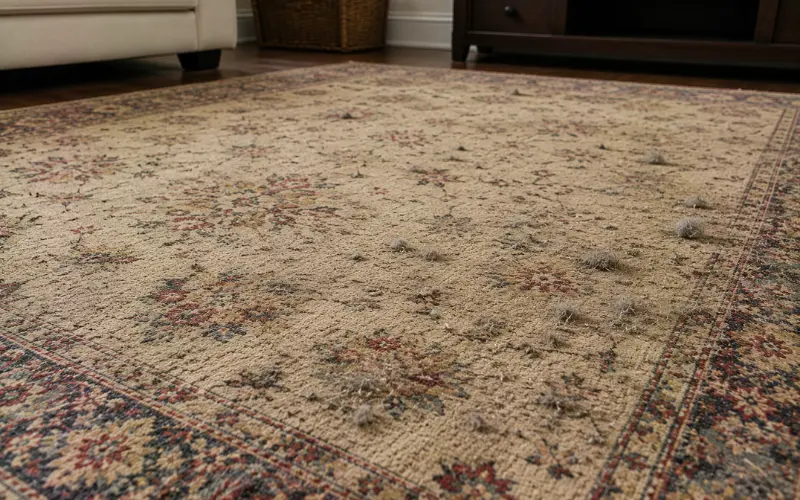
Here’s how you can correct it:
- Vacuum weekly using gentle suction, avoid setting the vacuum too high, as excessive suction can pull threads loose and damage delicate fibers.
- Rotate rugs every few months to balance foot traffic and sun exposure.
- Schedule a professional cleaning at least once a year
Mistake 6. Incomplete Drying
Many times, owners make the mistake of putting a rug back before it’s fully dry. Our experts point out that even when the surface feels dry, moisture can remain trapped in the backing and foundation, fostering the perfect environment for mildew, odors, and even damage to the flooring underneath. The hidden dampness also causes significant fabric damage.
Here’s how you can correct it:
- Allow rugs to air‑dry completely before reuse, not just until they feel dry to the touch.
- Use fans or dehumidifiers to speed up drying in shaded, ventilated areas.
Key note: Avoid direct sunlight exposure to prevent color fading while drying.
Mistake 7. Delaying Professional Care
One mistake that often persists, as per our specialists, is overlooking the clear signs that a rug requires expert care. Stubborn stains that don’t lift with routine cleaning, lingering odors, frayed edges, or colors that appear dull even after thorough vacuuming.
All of these indicate that DIY methods have reached their limit, and minor issues can escalate into permanent damage if ignored.
Here’s how you can correct it:
- Pay attention to recurring stains or odors that resist household cleaning.
- Watch for fiber wear, fading, or uneven texture; these are red flags for deeper issues.
- Schedule professional cleaning when rugs no longer respond to regular maintenance.
Let Experts Take Care of Your Area Rugs to Prevent Costly Cleaning Mistakes
Even if you’ve made some of these area rug cleaning mistakes before, correcting them will help preserve your rugs for years to come. It’s natural to feel overwhelmed, but the good news is that most of the cleaning mistakes that ruin rugs can be managed with consistent care and timely assistance from professionals like us.
At California Steam Team, our IICRC technicians specialize in delivering the best area rug cleaning services that refresh faded colors, revive softness, and eliminate deep-set dirt and odors. Using powerful truck-mounted steam cleaning machines and eco-friendly cleaning solutions, we provide safe, secure cleaning for all rug types.
Call us today, without any hesitation, and let our experts guide you through the process of how your rug will be restored.
FAQs
Q. Is it costly to get an area rug cleaned professionally?
Professional rug cleaning usually ranges from $100 to $300, depending on size and fabric type. It’s a cost‑effective way to preserve value compared to replacement.
Q. What signs indicate it’s time to replace a rug instead of cleaning it?
If fibers are frayed, backing is damaged, or colors remain dull after cleaning, our specialists believe it’s often more practical to replace the rug than continue spending on rug maintenance instead.
Q. Is professional area rug cleaning in winter a good idea?
Yes, winter is ideal as rugs trap salt, moisture, and indoor dust during colder months. Professional area rug cleaning in winter helps remove buildup, prevents fiber damage, and maintains indoor air quality.
Q. How often should area rugs be professionally cleaned?
Rugs in high‑traffic areas should be cleaned every 6 to 12 months, while low‑use rugs may only need professional care every 18 to 24 months. Call us at (805) 804-0298 to discuss which booking schedule will work best for your area rug.
Q. Is it better to shampoo or steam clean area rugs?
Steam cleaning is safer for fibers and more effective at removing deep dirt, while shampooing can leave residues if not rinsed thoroughly, compromising the fabric and requiring frequent cleaning.